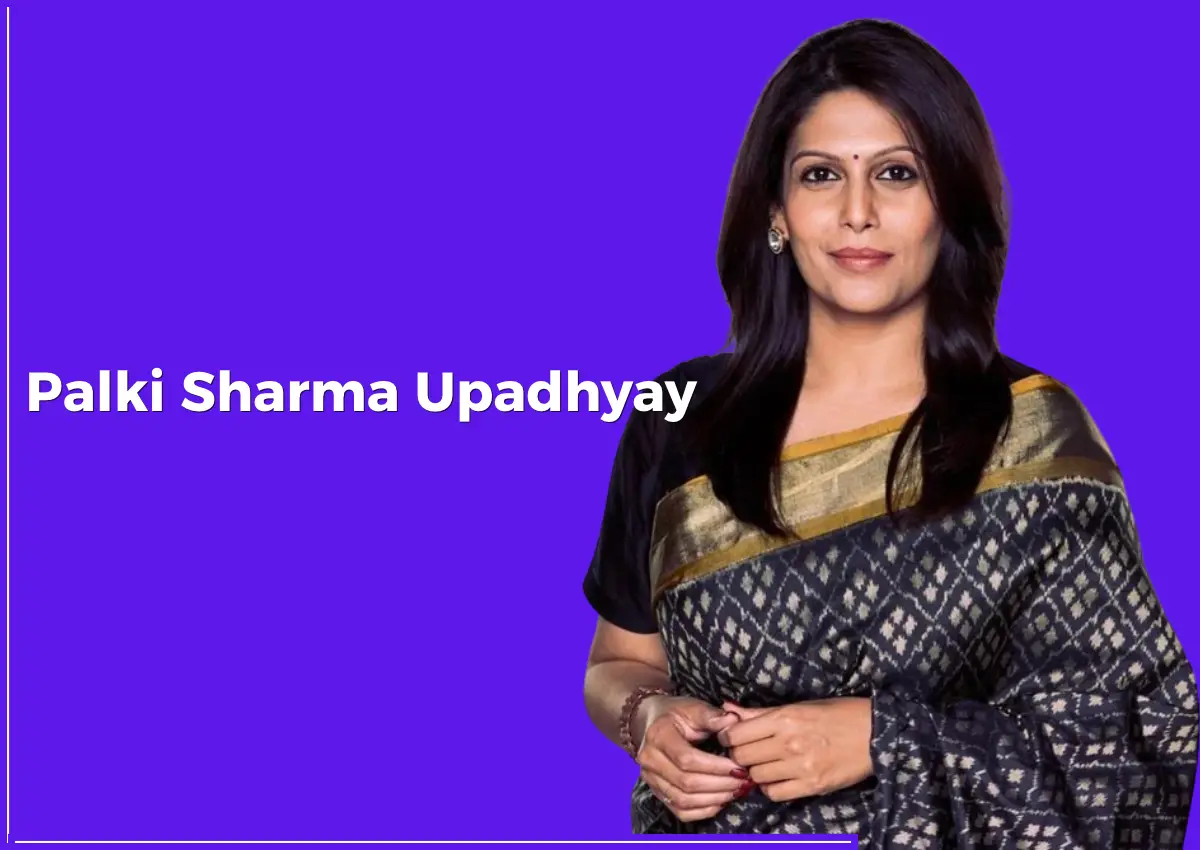
Few Indian journalists have built a following the way Palki Sharma has. She did it through steady, opinionated explanation of world events, delivered in a calm voice and a compact monologue, rather than through shouting matches or studio theatrics. To a generation of viewers, particularly the young and the Indian diaspora, she became the person who explains what is happening in Washington, Beijing, Moscow or Gaza and why it matters to India.
Her career runs from a first anchoring job in her college years to the founding of her own global newsroom. She has worked in state television, print, a private news network, an international English-language channel and a digital-first platform, and in 2026 she became a media founder. This article follows that path: her early life and education, her career step by step, her business ventures, her personal life, her editorial style, the debates around her work, and answers to the questions people most often ask about her.
A word on method. Much of what circulates online about public figures comes from unattributed “biography” websites that copy one another. This article leans on trade-press coverage, a university awardee profile and the announcements around her career moves. Where sources disagree or look unreliable, the claim has been hedged or left out.
Palki Sharma at a Glance
| Detail | Information |
| Full name | Palki Sharma Upadhyay |
| Known as | Palki Sharma |
| Date of birth | 29 May 1982 |
| Birthplace | Pilani, Rajasthan, India |
| Grew up in | Delhi |
| Profession | Journalist, anchor, editor, media entrepreneur |
| Best-known shows | Gravitas (WION), Vantage (Firstpost) |
| Earlier employers | Doordarshan, Hindustan Times, CNN-IBN / CNN-News18, WION, Firstpost |
| Current venture | India Global Review (IGR) |
| Spouse | Sanket Upadhyay |
Career Timeline
| Period | Milestone |
| 2002 | Begins as a news anchor and reporter at Doordarshan |
| 2004 | Joins the Hindustan Times |
| 2007 | Receives a Best News Reader award |
| Mid-2000s to mid-2010s | Anchor and senior editor at CNN-IBN, later CNN-News18 (about eleven years) |
| WION years | Rises to managing editor; hosts the prime-time show Gravitas |
| September 2022 | Resigns from WION |
| 26 January 2023 | Vantage launches on Firstpost with her as host and managing editor |
| 29 January 2026 | Announces she is stepping down as Firstpost managing editor |
| April 2026 | Announces India Global Review and begins hiring |
Early Life and Education
Palki Sharma was born on 29 May 1982 in Pilani, Rajasthan, but she grew up in Delhi. Pilani is a small town best known for its engineering and science institutions, so it is a slightly unexpected birthplace for a future television journalist. Delhi shaped her more. She grew up in the capital, where the political, diplomatic and media worlds sit within a few square miles of each other, and that setting plausibly fed an early interest in how power works and how it is described to the public.
Profile pieces repeatedly mention one detail of her teenage years. Her father encouraged her to pursue medicine, but she loved writing, so she chose English and began writing for local newspapers while still in college. Many Indian families see medicine or engineering as the safe, respectable path, so this was a real fork. Choosing English and writing over a medical track was a bet on a less certain career.
On academics, several biographical profiles say she holds a master’s degree in communication and journalism from the ICG Institute in Jaipur. The same profiles say she studied French at the Alliance Française de Delhi and reached the C1 level. Her French is worth noting because it fits her later work. A journalist who covers global affairs benefits from being at ease with languages, and French remains a working language of diplomacy and of much of Africa and Europe.
The available material on her childhood is thin. She has kept her family life largely out of public view. Some websites describe her parents’ professions and her schooling in detail, but these claims are hard to verify and come mostly from aggregator sites, so this article does not repeat them. What can be said is that she grew up in a family that let her choose her own path, even if her father had a different career in mind.
The Accidental Start: Doordarshan, 2002
Palki Sharma often describes her entry into journalism as an accident. She did not plan the career; it found her. In her second year of college, a Doordarshan representative approached her with an offer to work as a news anchor. Doordarshan, India’s public broadcaster, was then the country’s most established television name, and being asked to read the news on it was a striking opening for a student.
The story has a second detail that people like to repeat: the early pay was very small by later standards. Some profiles put her first salary at ₹800. Treat the exact figure with caution, since it comes from secondary sources, but the point is clear. She started at the bottom, with modest money and a great deal to learn.
According to a profile published by MIT-WPU, she began at Doordarshan in 2002 as a news anchor and reporter. A state broadcaster was a good place to learn fundamentals. Anchoring on Doordarshan means clear diction, disciplined scripting, a neutral register and the ability to read news accurately and calmly. Those habits show up in her later work, even though the content of her shows became far more opinionated.
A 2007 award supports this reading. She received a Best News Reader award that year, an early sign that her on-screen delivery stood out even among peers.
Print Experience at the Hindustan Times
Palki Sharma did not stay in television only. She joined the Hindustan Times in 2004. Later profiles describe her there as a staff writer, someone who read, wrote and formatted stories and spent long hours refining her craft.
This step matters for understanding her style. Many television anchors come up through broadcast alone and can be very good at presentation without deep newsroom-writing experience. Sharma’s stint in print gave her a grounding in editing, headline writing, structure and story selection. It helps explain why her later monologues read like well-organised essays: a hook, a framework, evidence, a conclusion.
Print also teaches an editor’s discipline about what to leave out. A good print editor learns that readers have limited time and that clarity beats volume. That instinct, compressing complex subjects into something digestible without losing the main argument, became a signature of her career.
The CNN-IBN and CNN-News18 Years
The next phase was a long one. Biographical accounts describe an eleven-year career at CNN-IBN before she moved on to WION. The channel was later rebranded as CNN-News18, and She is described as its anchor and senior editor. These years turned her from a promising anchor into a senior television journalist.
CNN-IBN was a leading English news channel of its time, and working there through the 2000s and 2010s meant covering a fast-moving period of Indian public life: elections, economic shifts, political controversies and profound changes in how Indians consumed news. Anchors at a national English channel are expected to handle breaking news, conduct interviews with politicians and business figures, and hold a prime-time slot together with producers and editors.
Profile sources say that during this period she interviewed prominent figures in politics, business and entertainment and became known for reducing complicated issues to something viewers could follow. This is the same skill that later defined her digital work. Television at that time still gave anchors a captive audience, but audiences were fragmenting, and people who could explain, and not just report, were becoming more valuable.
Just as important as what she did was what she was learning. Eleven years at one organisation gave her deep experience of editorial decision-making, ratings pressure and the practical politics of a large newsroom. She was also building name recognition, which would prove essential when she later moved to platforms where personal brand mattered as much as the channel’s.
WION and the Rise of Gravitas
Palki Sharma’s next big move was to WION, the English-language international news channel based in New Delhi. Sources disagree on exactly when she joined. The MIT-WPU profile says she joined in 2019 and served as managing editor for about three years, while some profile sites give an earlier start. For a biography, the safe statement is that she became one of WION’s defining faces during the years she was there and rose to managing editor.
The show that made her famous was Gravitas. It was described as India’s only international news and views prime-time show, and the description points to what set it apart. Most Indian prime-time programming at the time focused on domestic politics, and much of it was loud. Gravitas took the opposite approach. It picked a global story and worked through it methodically: who the players were, how the history led to the current moment, and what it meant for India.
Its format helped it travel. It was built around a clear voice and a strong sense of pacing, and it was easy to clip and share. Segments about geopolitics, trade disputes, wars and diplomatic rows circulated on YouTube and social media well beyond the channel’s television audience. This reflects a broader shift in how news is consumed: a show’s real audience was increasingly online, and viewers arrived through a single video rather than a channel guide.
Recognition followed. The MIT-WPU profile records that she won the ENBA award for best international news show in English for Gravitas. That was validation from the industry that a show about world affairs, in an Indian news market crowded with domestic debate, could succeed on quality.
She resigned from WION in September 2022. It surprised many observers, because she was one of the channel’s most recognisable faces. Resignations at that level usually mean a next step is already in view, and in her case it was.
Firstpost and Vantage: The Global Breakout
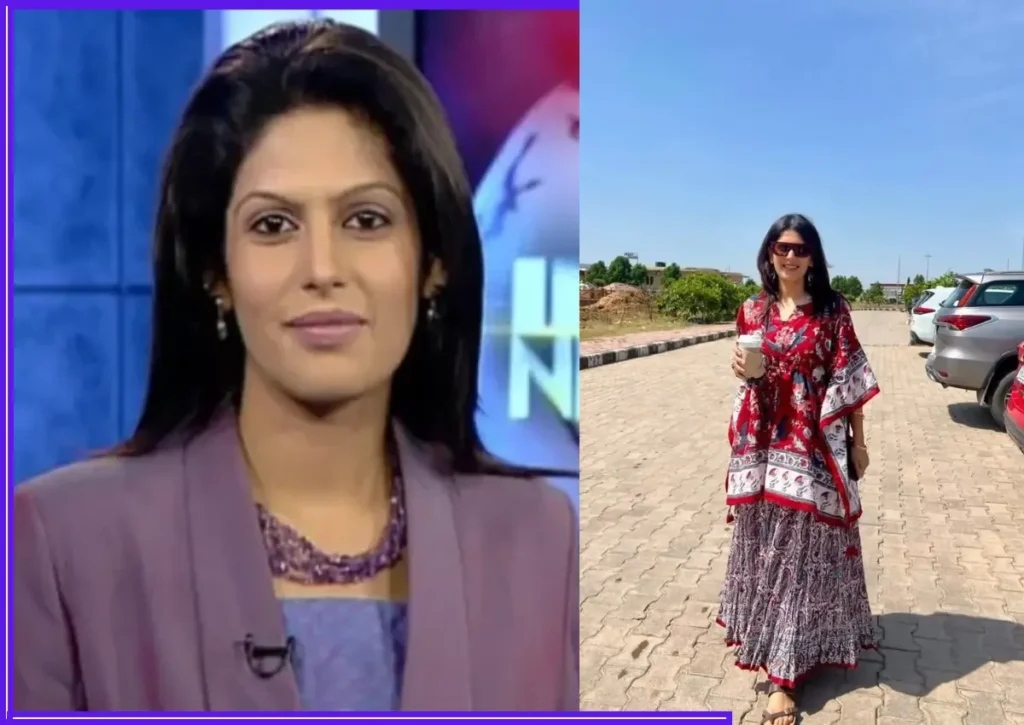
On 26 January 2023, Firstpost launched its prime-time show Vantage, hosted by managing editor Palki Sharma Upadhyay, formerly of WION. It was the show that turned her from a well-known anchor into an internet-scale phenomenon.
Vantage was built as a global affairs monologue, airing on Firstpost and CNN-News18. A single presenter walks the viewer through a topic, using graphics, archival footage and a strong narrative structure. The style is closer to a video essay than a traditional news bulletin. It relies on the presenter’s credibility, clarity and ability to hold attention for several minutes without a panel of guests to break things up.
Why the format worked
- Clarity over volume. Sharma’s delivery is measured and she rarely raises her voice. In a media environment where many programmes compete on intensity, a composed and structured explanation stands out.
- An Indian lens on global stories. A repeated theme in coverage of her work is that she presents global news through an Indian perspective. That matters to Indian and diaspora viewers who feel much international coverage is filtered through Western assumptions. Vantage asked, in effect, what a story means for India and for Indians abroad.
- Built for the platform. The show suited YouTube. The self-contained segments, strong titles and thumbnails, and consistent length all suited how people find and share video. It was not a television programme awkwardly uploaded to YouTube; it was designed with digital distribution in mind.
- A personal brand. Viewers came to trust her as a guide. In an age of information overload, a trusted explainer is valuable, and audiences subscribe to a person as much as to a publication.
Alongside Vantage she hosted other formats. Profiles mention Flashback, a history-focused show, and Between the Lines, an explanatory show. Both were described as popular for compressing complicated topics into short, accessible pieces.
The audience shift
One striking claim in coverage of her exit concerns what happened to Firstpost’s audience. One report, citing internal metrics, says that over 60% of the site’s traffic came from overseas, compared with under 10% before she took charge. Since this comes from a single secondary report citing internal figures, treat it as indicative rather than audited. Even so, the direction matches the wider narrative: Firstpost’s audience became far more global during her tenure.
She was also highly visible during major news events. Profiles note that she drew particular attention during the 2025 India–Pakistan crisis around Operation Sindoor, when her commentary and coverage were widely watched. In moments of conflict, audiences look for anchors they trust to explain what is going on, and she was one of them.
Leaving Firstpost and Launching India Global Review
The most recent chapter of her career is her move from employee to founder.
On 29 January 2026, at a town hall for Firstpost staff, it was announced that Sharma would step down as managing editor after three years to start her own venture. Network18’s chief content officer told staff she would remain with the company until March. The leadership handover was announced at the same time: Binoy Prabhakar was named chief content officer of Firstpost, and Rakesh Rai was promoted to managing editor of News18.com.
The tone of the announcement was warm. The internal note praised her role in launching Vantage, her clarity as an anchor, her commitment to presenting global news through an Indian lens, and her work building an editorial team and a culture of journalistic excellence. Media reporting framed the exit as planned and amicable rather than a dispute, and the consistent explanation was that she wanted to build something of her own.
What is India Global Review?
In April 2026 the venture took shape. On 20 April 2026 she posted on X that she was building a global newsroom in India and looking for storytellers, and the announcement listed roles such as multimedia producers, writers, video editors, graphic designers and camera staff. The company is called India Global Review, or IGR.
IGR is positioned as a digital-first platform on world affairs from an Indian perspective. It plans to expand across regions including the United States, Europe, West Asia, South Asia and Africa, with distribution across major internet platforms and connected TV. Reports also say it has secured backing from institutional investors and started a hiring drive across editorial, production and digital roles, with plans for international bureaus and a wider network of reporters. Her stated goal is to bring clarity to world affairs in a polarised media landscape, with an emphasis on facts, context and perspective.
The move reflects a wider trend. Established anchors with loyal audiences are increasingly leaving legacy organisations to build independent platforms where they control editorial strategy, formats and monetisation. Sharma has an advantage most founders lack: an existing audience that trusts her. She also faces the challenges every media startup faces. A publication needs revenue, reporting capacity, legal and editorial systems, and a business model that survives beyond the founder’s on-screen presence. Building bureaus and a network of reporters is expensive and slow, and the next few years will show how well a personal brand converts into a durable institution.
Beyond the Newsroom: Reyva and Entrepreneurship
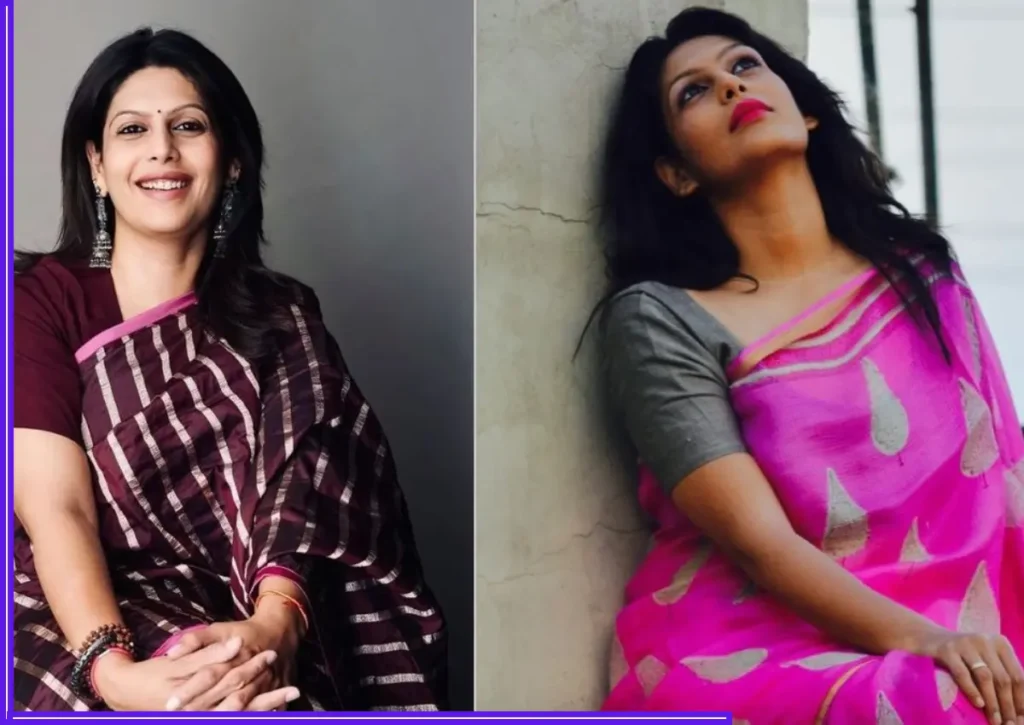
Media entrepreneurship is not her first business experience. Profiles consistently note that she founded a designer saree brand called Reyva, and one report dates the brand to the period between 2016 and 2019. Another describes it as her way of turning a love of sarees into a business.
The venture says something about her. It shows an interest in design and craft, and a willingness to try running a business while holding a demanding full-time journalism job. It also fits a wider pattern in which Indian professionals build side businesses around personal passions. Whether or not Reyva remains active, it means the founder mindset predates IGR.
Personal Life
Palki Sharma keeps her private life private, and reliable detail is limited. What multiple profile sources agree on is this: she married Sanket Upadhyay in 2008, and they have two children. Some profiles describe her husband as a journalist, while others describe him differently, so it is best not to assume his profession. Her children are not public figures, and this article does not name them.
Her interests, as listed in profile sources, include reading, cooking, interior design and painting pots. One profile lists these hobbies alongside her saree business and French studies. They suggest someone with strong creative and practical interests outside news, which is consistent with her work in fashion and design.
Palki Sharma has said little in public about the work-life balance she has managed across two decades in a demanding profession, including early-morning shifts, prime-time schedules and breaking news. Her career does show sustained ambition alongside family life, which is part of why many young women in media see her as a role model.
A caution is worth stating. Figures such as net worth, family anecdotes and school names circulate widely online, but most rest on unattributed claims and vary from site to site. For an accurate picture, rely on her own statements, her employers’ announcements and reputable trade coverage.
Her Style and Editorial Approach
The monologue as a craft
Palki Sharma’s defining tool is the monologue. A good one is harder than it looks. It has to hold attention for several minutes with one voice, avoid unnecessary jargon, and build a logical argument that a first-time viewer can follow. The best examples set out the problem, explain the background in a few clear steps, and then interpret what it means. That is essentially the structure of a good newspaper editorial, adapted for video.
A calm register
Unlike the loud debate format that became common on Indian television, her delivery is restrained. She is known for pointed commentary without raising her tone. Her approach uses irony, understatement and sharp phrasing where a raised voice might otherwise be used. This has become part of her brand and helped her stand out in a crowded field.
Global stories, Indian frame
Her subject matter is consistently international, but her framing is consistently Indian. Whether the topic is a war, a trade dispute or an election abroad, the throughline is the question of what it means for India. Supporters see this as a needed corrective to a news landscape where Indian viewers get global news through Western outlets. It also matches an increasingly confident view among many Indians that their country should help shape the global conversation, not merely follow it.
Digital-first thinking
Perhaps the most important feature of her career is how early and how well she adapted to digital distribution. Her shows are structured for online viewing: compact, well titled and easy to share. She understood earlier than many broadcast peers that the future audience sits on YouTube and social platforms.
Why She Resonates with the Indian Diaspora
Coverage of her Firstpost years repeatedly highlights an audience far beyond India’s borders. There are structural reasons for this. Members of the diaspora follow events in two places at once, and they often want an explanation that connects developments abroad to their own family and community stakes. A programme that treats India as a serious actor in global affairs, rather than as a footnote, speaks directly to that need.
Format matters as well. A clear ten-minute explainer is easy to watch on a phone, easy to send to a relative and easy to revisit. For a viewer in another time zone who cannot follow a live prime-time broadcast, an on-demand explainer is far more useful than a schedule-bound bulletin. Her career shows how a journalist can reach a worldwide audience without a worldwide broadcast network.
It also explains why her new venture is aimed at multiple regions from the start. IGR’s announced plan to expand across the United States, Europe, West Asia, South Asia and Africa reads as a deliberate attempt to serve an audience she has already been reaching informally.
The Business of a Personal Brand
Palki Sharma’s trajectory offers a case study in how a journalist’s personal brand can become a business asset. At each stage, her audience recognised her rather than any single institution. This portability carries real leverage in a media market where reach depends on trust.
It also carries risk. A brand built on one person’s face can be hard to scale, because audiences may not transfer their loyalty to other presenters. The founders who succeed in this model usually build a team of recognisable voices, invest in reporting that does not depend on the founder, and diversify revenue beyond advertising. Whether IGR does so will determine whether it becomes an institution or remains a vehicle for one presenter.
The announced hiring drive, covering writers, producers, editors, designers and camera crews, and the stated plan for international bureaus suggest that she understands this. Turning a hit format into a newsroom is a different discipline from anchoring it.
Awards and Recognition
The awards attributed to her in reliable sources include the following.
- Best News Reader award (2007), early in her career, according to the MIT-WPU awardee profile.
- ENBA award for Best International News Show in English, for Gravitas, also recorded in the MIT-WPU profile.
- Some biographical sites list additional honours, including a 2023 award, but the sourcing is thinner, so verify against the awarding body before citing them.
Awards are only one measure. Her audience numbers, her presence in conversations about Indian media, and the decision of investors to back her new company say more about her influence than any trophy.
Criticism and Debate
A balanced portrait should include the debates around her work.
- Opinion and news. Monologue formats blend explanation with opinion. Supporters value the clarity, while critics argue that any single-voice programme, however well researched, risks presenting a particular perspective as settled fact. This critique applies to the opinion-led format generally, not only to her.
- The “Indian lens” question. Presenting world events through an Indian perspective is a stated editorial choice, but critics may ask where perspective ends and advocacy begins. She and her supporters would reply that every outlet has a perspective and that hers is openly declared.
- Institutional context. Firstpost belongs to the Network18 group, and her programmes ran within the editorial ecosystem of a large corporate media house. As with any journalist working within a big organisation, observers debate how ownership shapes coverage. Separately, the outlet’s Wikipedia entry notes that fact-checkers have found incorrect information on Firstpost on several occasions. That is a point about the outlet, not a finding about her personally, but it is part of the context readers should know.
- The independence test. Now that she runs IGR, the standard changes. Independence will be judged on its editorial choices, its funding transparency and its willingness to cover uncomfortable stories, including those involving its own backers and the government and business establishment.
What Her Journey Teaches
- Skills compound. Doordarshan taught her diction and discipline. The Hindustan Times taught her writing and editing. CNN-IBN taught her television at scale. WION taught her international news. Firstpost taught her digital reach. Each step built on the last, and the combination is what makes her distinctive.
- Format is a competitive advantage. Many journalists compete on access or scoops. She competed on structure. Her ability to turn a sprawling story into a clear ten-minute narrative is a repeatable craft, not a one-off talent.
- Personal brand and institutional strength are different things. Her audience followed her from channel to channel, which shows the power of a personal brand. It also helps explain why she chose to build her own platform: a brand you own is worth more than a brand you rent.
- Careers rarely follow a plan. Journalism was not her plan. An unexpected approach from a broadcaster in college redirected her life. What she did with the opening was the real story: preparation, consistency and a willingness to keep moving into new formats.
- Timing matters. She arrived in global-affairs explainer content just as audiences, especially in India and the diaspora, were hungry for it, and as YouTube became a serious news distribution channel.
What Comes Next
The future of her career now depends on India Global Review. Some questions will shape the outcome. Can a founder-led newsroom build the reporting capacity that a monologue show does not need? Will bureaus across several regions be built and funded sustainably? Can a brand built around one recognisable face grow into a multi-voice organisation? And how will the platform balance the commercial pull of engagement with the editorial promise of independence?
Her supporters believe she has the audience, credibility and investor backing to try. Sceptics will point out how hard it is to build a durable media company. Whichever view proves right, the attempt marks a notable moment for Indian journalism, where a senior anchor is betting on her own platform.
Frequently Asked Questions (FAQ)
Who is Palki Sharma?
Palki Sharma, also known as Palki Sharma Upadhyay, is an Indian journalist, anchor and media entrepreneur best known for her global affairs shows Gravitas on WION and Vantage on Firstpost. She is now the founder of India Global Review.
When and where was Palki Sharma born?
She was born on 29 May 1982 in Pilani, Rajasthan, and grew up in Delhi.
What is Palki Sharma’s educational background?
Several profile sources say she holds a master’s degree in communication and journalism from the ICG Institute in Jaipur, and that she completed C1-level French at the Alliance Française de Delhi. Since these come from secondary sources, confirm with primary sources if you need them for formal use.
How did Palki Sharma start her career?
A Doordarshan representative approached her in her second year of college, and she began as a news anchor and reporter in 2002. She later moved through the Hindustan Times, CNN-IBN/CNN-News18, WION and Firstpost.
What is Gravitas?
Gravitas was a prime-time show on WION focused on international news and analysis, presented by her. It won the ENBA award for best international news show in English.
What is Vantage with Palki Sharma?
Vantage is a prime-time global affairs show launched by Firstpost on 26 January 2023 and hosted by Sharma. It became widely popular for its monologue format and its Indian perspective on world news.
Why did Palki Sharma leave WION?
She resigned in September 2022. No detailed public explanation has been widely reported beyond her move to Firstpost.
Why did Palki Sharma leave Firstpost?
She stepped down as managing editor after three years to start her own venture, and she stayed until March 2026 to help with the transition. Media reports framed the exit as planned and amicable.
What is India Global Review (IGR)?
IGR is her digital-first global media company headquartered in India, focused on world affairs from an Indian perspective, with plans to expand across several regions and to distribute on internet platforms and connected TV. Reports say it has institutional investor backing.
Who is Palki Sharma’s husband?
Profile sources say she has been married to Sanket Upadhyay since 2008. She keeps her family life private.
Does Palki Sharma have children?
Profile sources say the couple has two children. Her children are not public figures, so their details are not covered here.
What is Reyva?
Reyva is a designer saree brand she founded. One report says she ran it between 2016 and 2019.
What awards has Palki Sharma won?
Reliable sources record a Best News Reader award in 2007 and an ENBA award for Gravitas. Other honours listed on some websites should be verified independently.
What is Palki Sharma’s net worth?
Palki Sharma Upadhyay’s net worth is estimated to be around ₹20 crore (approximately $4 million USD), though this figure is unconfirmed and based on media estimates. Net worth figures published online are estimates from unattributed sources and vary widely, so this article does not repeat them.
What makes her style different from other Indian anchors?
Her defining features are the structured monologue, a calm delivery, a consistent focus on global stories with an Indian perspective, and a digital-first approach to distribution.
Where can I follow her work now?
Her newest venture is India Global Review, which announced its launch and hiring drive in April 2026. Check the platform’s official website and her verified social media accounts for current programming, since the venture is new and details are still developing.
Conclusion
Palki Sharma’s story begins with an unexpected offer in college and runs through state television, print, a major private network, an international news channel and a digital-first show that reached audiences across the world. In 2026 it entered a new chapter when she left a senior position at a large network to build her own newsroom.
What connects the stages is a consistent craft: turning complicated global events into clear, structured explanations, delivered in a composed voice with an Indian frame. Whether India Global Review becomes a lasting institution remains to be seen, but her path already shows how a journalist can move from reading the news to running a media company.